I’ve driven a lot of miles this year, 30,000 miles in the past 9 months. I’ve seen a lot of “destination locations”, but I’ve also spent a fair amount of time gazing over land that will never make an “America’s Top Road Trip” or “Must Visit” list. I’ve long balked at people’s ideas of bad rides. I can ride along a highway for 100 miles and be happy as a clam, but this year I learned how incredible the least suspecting of places can be, that hole-in-the wall places are similar to restaurants, right in front of your eyes often but missed. Nothing supports this more than my time in Rock Springs Wyoming. I spend a lot of time convincing power meter and perfection obsessed athletes that random places are more than worthwhile and serve up a platter of fine riding just as much as meccas like Boulder; while I understand certain workouts are best with specific roads, traffic density, elevation changes, weather, etc, I have this idea that nearly anywhere in the world can give you what you want, and more than you need, if you let it and contribute a little of your own flexibility.
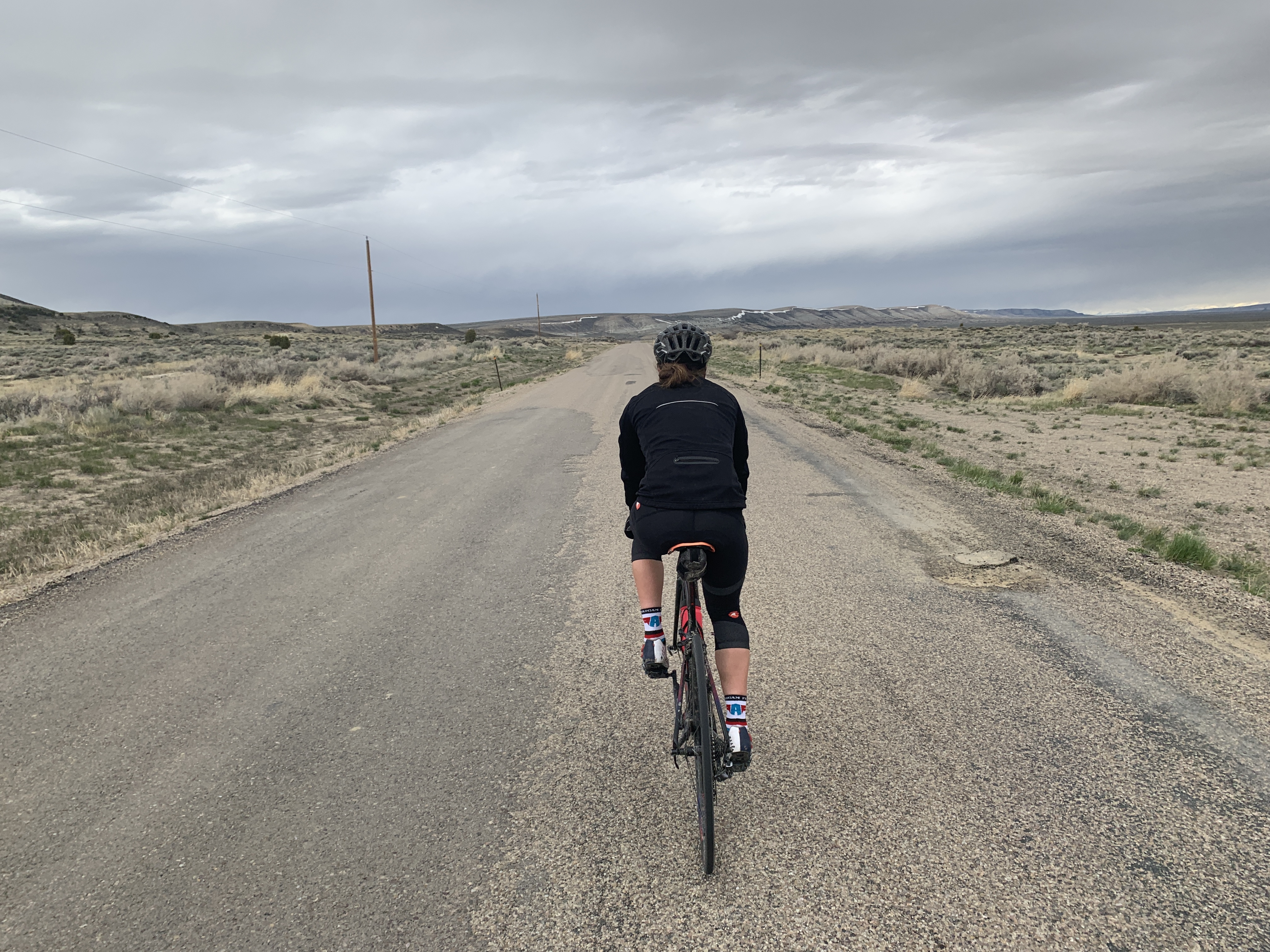
It was 30 degrees and snowing out as my partner and I left a cabin in the Tetons. We both had a ride to do and not enough time to split it between the single trainer we have on the road with us, the infamous I-90 stretched out ahead, the flurries a reminder of winter still obviously present, and a deadline to be across the country in three days time occupied the forefront of my mind. I searched Google and maps for a place with the lowest elevation, i.e. warmest, and proximity that would leave us time for daylight, and settled on Rock Springs, Wyoming. Driving under a grey sky for hundreds of miles there were sandy plains of sage, cattle, and not much else. Arriving in town we navigated to a park on the western edge and chose to ride straight down one of the only roads out of town. For a remote town the density of houses was surprising. Every home seemed equipped with an RV and a boat. We passed skating rinks, recreation centers, and a pretty sate of the art looking fair ground along with many restaurants advertising ethnic cuisine – atypical of the western towns we’d previously seen. We rolled the peaceful road as it turned to gravel marveling at the stillness, mountains with their snowy caps to our left, and miles of land visible stretched out around us. We turned around when the road deadened into the same highway we drove in on.
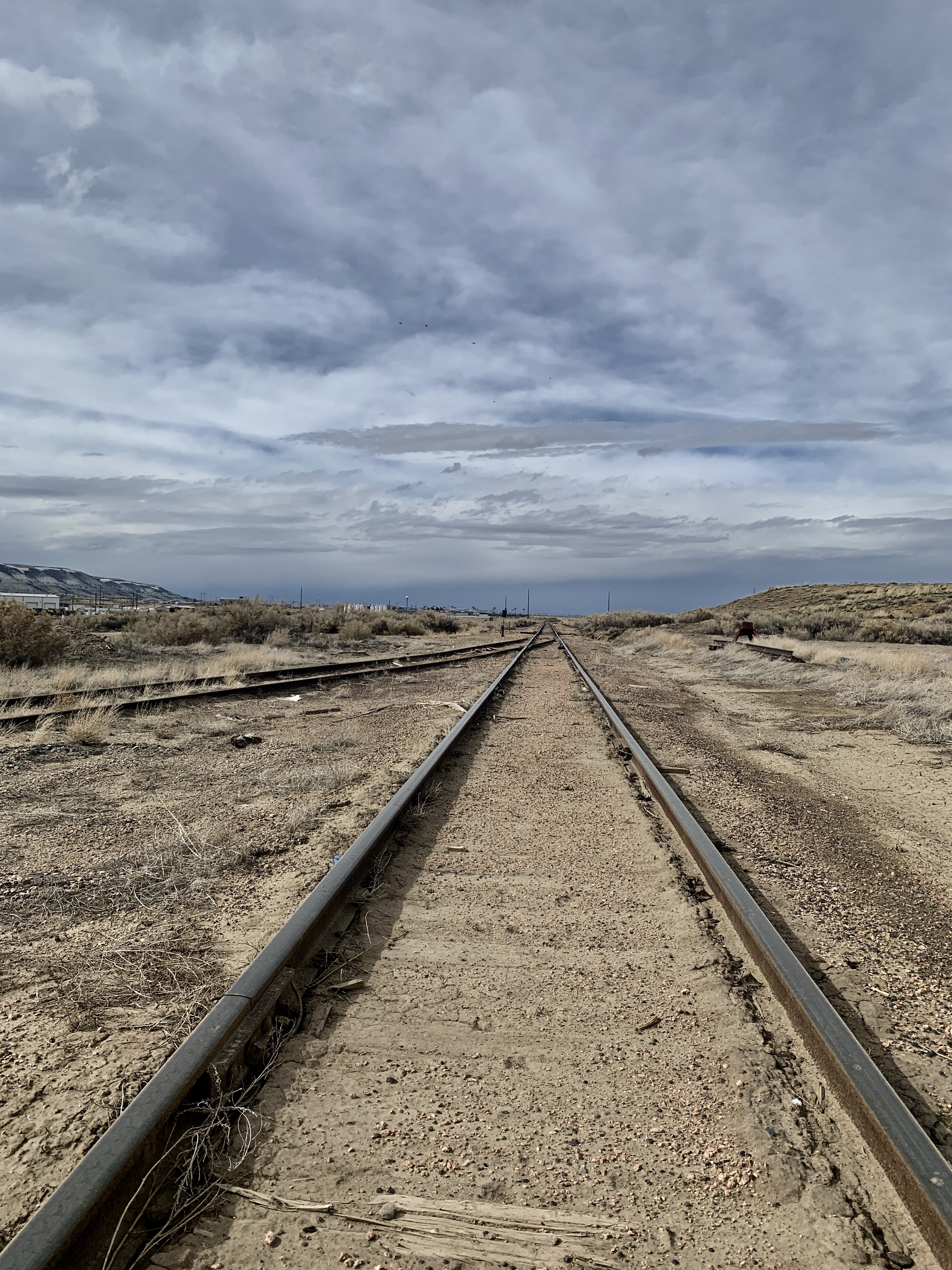
Turns out, Rock Springs, known as the Home of 56 Nationalities, is home to over 20,000 people and the largest industry remains extraction and processing. The Union Pacific Railroad drew in a diverse group of people to the energy-rich region in the 1800’s as they plowed through. Workers minded the coal (now rare metals, natural gas, and oil are the main resources mined) to power the engines and feed an industry potentially as dirty as the rock itself. The Rock Springs Massacre happened in 1885 when tensions fostered by Union Pacific Railroad (UNP) that created an anti-Chinese sentiment between the groups boiled over. The White miners tried to drive out the Chinese as the UNP hired them increasingly lower wages. A riot composed of 100 plus Whites stormed China town and the mines opening fire on those fleeing. Every living space a Chinese person inhabited was looted and burned to the ground as the Chinese fled onto railroad cars first heading West then, unbeknownst to them, away from the freedom and backpay promised in San Fransisco back to their fallen brethren in Rock Springs. The Chinese were coerced further into returning to work and staying in an area intended to be only a stepping stone in their journey. A fort was built nearby by the US government and run in the following decades by to “maintain order”.
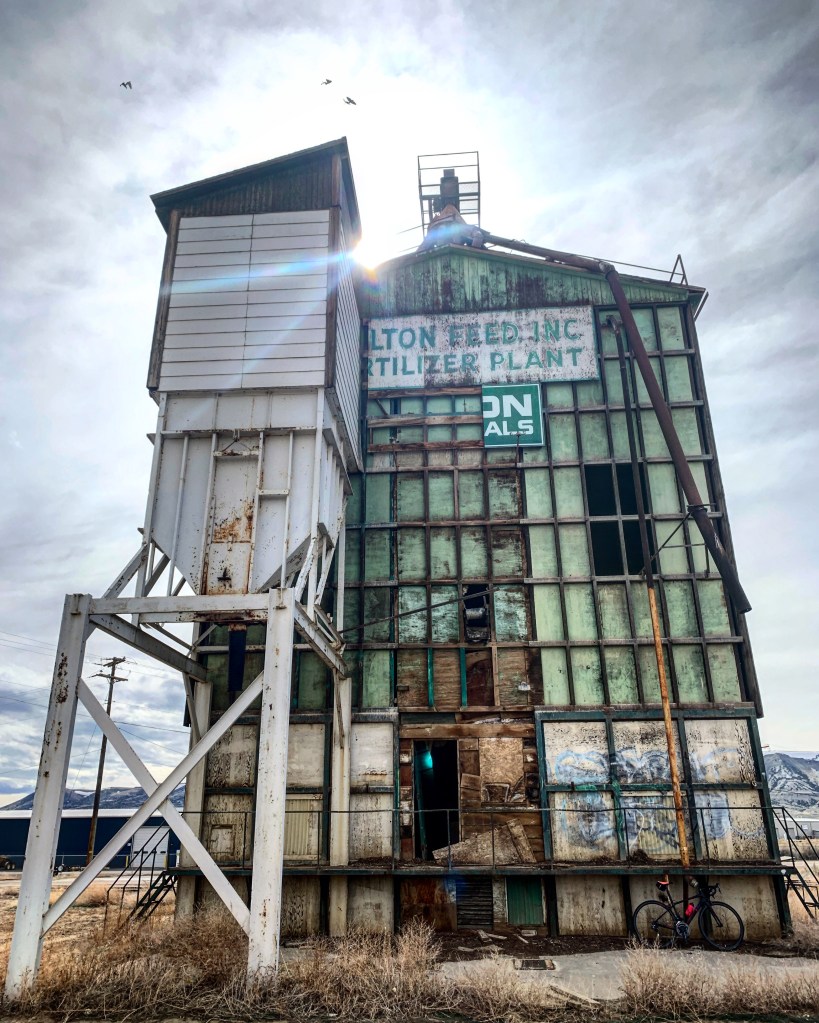
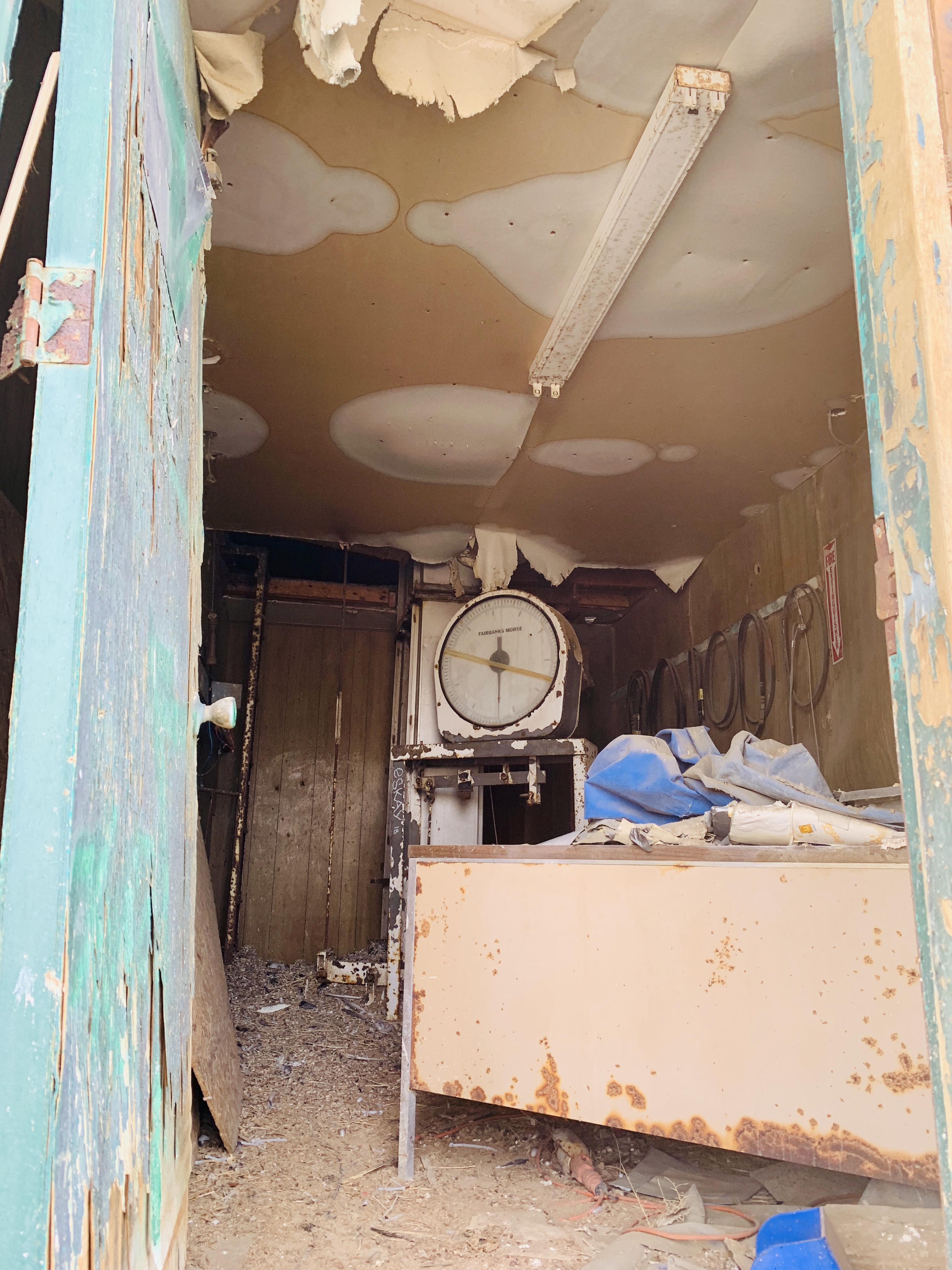
I stopped at an abandoned fertilizer and seed mill at the end of the ride (picture). I stood marveling at it’s simultaneous decay and beauty as the sun backlit a teal paneled structure of rusting pipes and decaying wood, some of it’s past still tucked in, the rest of it’s insides spilling out onto a thick carpet of bird waste. The convolution of the beauty of standalone moments and the often invisible history they are seeped in is something I am constantly pondering. We finished our ride and climbed back in the van excited at how good riding could be out here, in a place any other cyclist, upon mention, would likely mock. I remain excited to keep finding these places, opening my eyes to the story and potential in every place. I think it is important to know and speak on the past and let the lessons there guide us to a better present and future, so I will keep looking in awe, marveling at each new sight as I ride, while attempting to see behind the veneer.
“The Massacre of the Chinese,” New York Times, Sept. 5, 1885, accessed April 26, 2011, at http://www.ghostcowboy.com/node/118.
 Melissa Teeple
I just ran into your dad and learned of your career choice and I’m so proud of you!! I want to follow your blog and hear more of your thoughts as you pedal this country!
LikeLike
Ms Hall! Hi, I am many months behind so just reading this, but I appreciate that so much. You all helped encourage us to go for it in 5th grade – I’m grateful; I hope you’re doing well. There’s so many stories out there I hope to share even a few well 🙂 Cheers!
LikeLike